In short
Before replacing an opener, check that the photo-eye lights are lit and the lenses are clean. If it still won't run, a technician in Purchase can repair it or install a new unit, and sets the force and reverse so it closes safely.
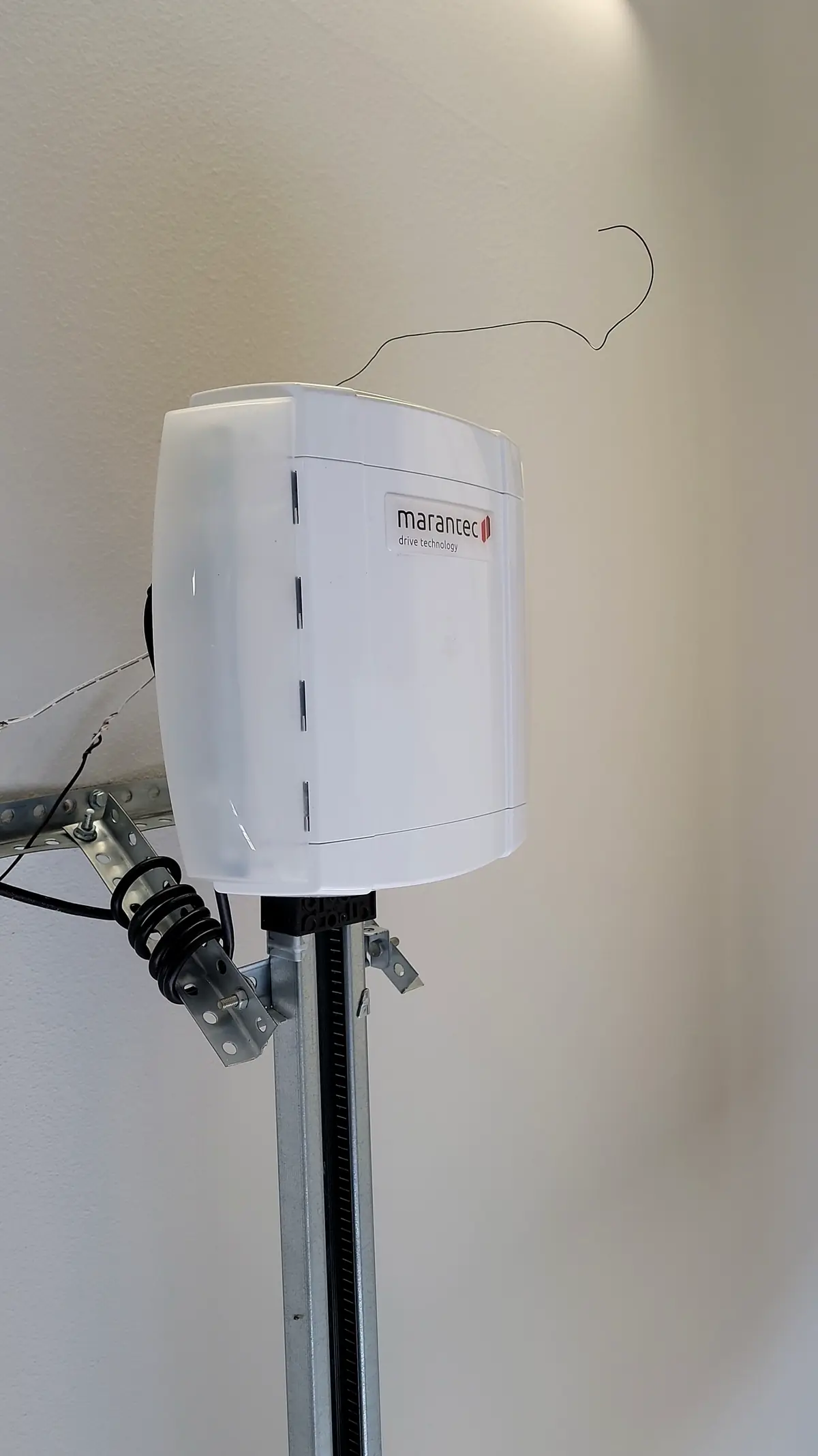
Openers in Purchase homes
Multi-bay garages in Purchase often end up with openers from different decades. Standardizing on one brand and app makes them easier to control, and wall-mount units suit garages with high ceilings, car lifts or storage overhead.
Long drives and gates make phone control and integration with gate keypads popular. Battery backup is a sensible safeguard during storm outages on wooded roads.
Opener trouble, sorted by symptom
- Reverses on the way down: sensor alignment or wiring.
- Clicks or hums, door doesn't move: drive gear, or a spring problem upstream.
- Works from the wall, not the car: remote batteries or lost programming.
- Dead: outlet, breaker, or logic board.
- Noisy: chain tension, sprockets, or a rail that needs securing.
The technician checks the door itself first. If it feels heavy or uneven with the opener disconnected, the real problem is a spring, and a new opener on a badly balanced door won't last.
Repair or replace?
Sensors, remotes, gears and limit settings are usually worth repairing. A worn-out motor, a failed board on an older unit, or an opener with no safety reverse usually isn't. Replacement options include quiet belt drives, side-mounted jackshaft openers for high ceilings, and models with battery backup and smartphone control.
Around Purchase
- Lincoln Avenue area: Older houses and newer builds between the campuses and the Rye Brook line.
- Estate subdivisions: Newer gated or cul-de-sac developments with oversized custom garage doors.
See the full Purchase service area.
Questions we hear in Purchase
We have custom wood doors. Can you work on those?
Yes. Custom doors need springs and openers matched to their weight; that's checked before parts are chosen.